Tuesday, November 30, 2010

Unschooling Isn't Parental Manipulation, It's Genuinely Respecting Children as People

Sometimes, actually quite often, the description of unschooling found in homeschooling books (and on homeschooling websites) is really, really not accurate.

And more even than simply inaccurate, I often find it rather insulting.

This is not a relationship built on dishonesty.
Because what's often insinuated, sometimes directly said, is that what unschooling really is, is not just "letting kids do what they want", but instead parents sneakily teaching their children what they, the parents, want them to know.  This is often written with a slightly conspiratorial and condescending air: isn't it wonderful how we let these children *think* they're allowed to follow their own interests, while really we're just pulling the strings?

Now, if actually put into practice, this would completely fall apart.  Kids know when they're being manipulated, and will often let their displeasure in this fact be known (I know that when younger, and faced with less respectful adults, my sister and I were definitely not impressed!); if they don't have any interest in something their parents think they should learn, and the parents force it anyway, it ceases to be unschooling; and if a parent shares an interest, asks if their kids want to go to a museum or sign up for a class, that's not in the least sneaky or manipulative, so doesn't warrant any conspiratorial aura.  All that is, is a parent openly asking their child if they'd be interested in doing something, or genuinely sharing a personal interest.

To think that all unschooling is, is teaching a child without the child ever realizing they're being taught is to completely misunderstand what unschooling is and how it works.  Well, I'm here to say that:

Unschooling has nothing to do with the covert manipulation of children.

An unschooling parent will fill their house with interesting things (or make available other resource rich places: libraries, cultural centers, co-ops, etc.).  They'll be happy to help their children pursue a passion or simply get an answer to a question.

Unschooling is a genuine respect for children, their right to choose their own learning, and their right to be supported in those choices.

Now if only people who have no actual experience or understanding of unschooling would stop pretending they do, it would make it much easier for people just discovering it to gain a solid understanding of what unschooling really is.

Sunday, November 21, 2010

5 Things Unschooling Is Not, and 5 Things Unschooling Is

Lists are fun. I like writing lists. So here are a couple of short ones on what Unschooling is, and is not.  

5 Things Unschooling Is Not
  1. Homeschooling (in the emphasis-on-"school"-sense): Usually considered a subset or method of home education, unschooling is nevertheless it's own unique philosophy, and one that shows little similarity to the philosophy of most home-schoolers.  Using the two terms interchangeably doesn't really work much of the time.
  2. Forced "learning": If you're being forced/made to do anything "educational" against your will, it isn't unschooling (though it may be relaxed homeschooling, or something similar).
  3. The same for everyone:  People sometimes like to latch on to something one unschooler says about the way they learn, and apply it to ALL unschoolers.  When in reality, in my mind one of the greatest things about unschooling is that no two journeys are the same.  As truly unique-to-the-individual education, every unschooler will be learning in a way that suits them best!
  4. Teacher-less: It certainly can be, but unschooling can also involve plenty of classes, teachers, tutors...  If chosen by the learner, teachers can be a wonderful resource for unschoolers!
  5. Individualistic: Or at least, I think the best way to approach unschooling is to realize that there are wonderful communities and resources out there to help you in your unschooling journey: everything from other unschoolers to give support, to the myriad of wonderful activities, groups, communities, etc., based around any interest you might have.  Unschooling doesn't mean going it alone: it means taking advantage of the vastness of the world around you.
5 Things Unschooling Is
  1. Exciting: When learning is chosen, and you realize that you really can pursue any interest you have, learning is fun, and learning is exciting!
  2. (Re)claiming your time: Doing what you really want to be doing with your time.  I think it was Grace Llewellyn (although I could be wrong) who said something alone the lines of "what is life but time?", in reference to the fact that schools steal your time, and thus your life.  An unschooler has control over what they do with their own time, and thus their own life.  They can dive headfirst into something and spend hours daily on that one subject, or they can research something for ten minutes before deciding they've had enough for now.
  3. Empowering: It feels good to know that you control your own learning, that you're steering your own course in life.  It's empowering to be trusted in doing so, and to feel confident that you're more than capable of living life your way!
  4. Gaining the tools needed to create a better world: A common criticism of unschooling is that unschoolers will never learn to do anything they don't like.  Though that's a false idea, I think it is true that since unschoolers are used to living a life that makes them happy, they're far less likely to just settle for the unhappy existence that so many people in our culture think is unavoidable.  Unschoolers know that there are better ways of living, so they're much more likely to work hard to make those better ways of living available in their (and others') adult lives as well!
  5. Respecting people of a wide age range: When outside of the false age segregation and imposed authority of school, you have the opportunity to interact on an equal footing with virtually every person you come across.  Because of this, instead of only making friends with people their own age, or very close to it, unschoolers value friendships with those from a wide age range.  The more we limit ourselves in our choices of who to spend time with, the more barriers we place between people, the fewer wonderful folk we'll connect with.  Realizing that people can be our friends no matter their age opens up so many wonderful opportunities for connection!
So there you have it: a few more things unschooling is not, as well as a few more reasons why I love this philosophy of learning so much!  Feel free to add your own additions to these lists in the comments.

Wednesday, November 17, 2010

Storytelling: An Art With Many Forms, or Why TV Shows Are Cool

I keep feeling a need to write, and have felt for the last few days like I should write a post on unschooling.  Because, you know, that's what this blog has become almost entirely about.

But you know what I really want to write about today?  I want to write about TV shows.

A couple of years ago, I hardly watched any TV shows.  There were maybe one or two I watched with any sort of interest or regularity, but that was about it.  Yet in recent times, I've come to truly appreciate about ten different shows, and really, really love a couple of those ten.  Having discovered the joys of watching shows on DVD when possible, I've devoured whole seasons in the space of a few days, caught up in wonderful worlds filled with compelling characters.  Current favorites include:

Buffy the Vampire Slayer: Though a classic of modern television to most people, I only started watching it in July of this past summer, after having heard rave reviews from multiple people.  I was quickly sucked in (no vampire pun intended), and after having gone through all seven seasons during the course of the summer (and very early fall), I can say that this is my favorite show, ever.  Terrific, hilarious dialogue; genuinely believable character development; great characters; clever storylines...  I was by turns literally falling over laughing and bawling my eyes out.  So yeah, it's just great!

Being Erica: A sweet, funny, and moving story about a woman who's building the life she truly wants through time traveling "therapy".  My only favorite Canadian show, since, well, there don't seem to be many Canadian shows to choose from at all, so considering the overall small percentage, the good ones are few and far between.  But this one is a real gem! 

Supernatural: My newest discovery (I'm currently nearly finished the first season), this show is about pretty guys fighting malicious spirits, demons, shapeshifters, and various other creatures of the night.  Since I'm someone who likes both fantasy/supernatural stories, and pretty guys, how could I resist it?  The interaction between the two main characters is great, and there's plenty of humour, a must for me (I can't think of a single show I like that isn't funny at least at times...  If there's nothing to laugh at, I get bogged down in serious shit and just get bored).


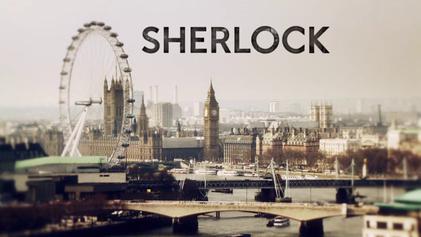
Sherlock: Really a mini-series more than anything, I've decided to count it anyway because it's a recurring mini-series (can't wait for the next season!  I sure hope it's longer than the first one...).  By far the best on screen take on Sherlock Holmes I've ever seen.  Set in modern day, this fast-paced, sharp, and witty show is just wonderful.  Also?  I usually (well, okay, mostly) refrain from shipping non-canon couples, but it's obvious that Sherlock and Watson are made for each other (and the show's creators totally play on that!).

Other shows I enjoy include Inspector Lewis, House, The Mentalist, and Doctor Who.

And what's the point of my telling you about a few of my favorite shows, you ask?  Well, besides recommending them to you, I want to talk a bit about storytelling.

You see, some people have this idea that storytelling is only worthwhile, only a valid way of spending time, if it fits a certain format: most often, those who feel this way consider books to be that format.  Yet storytelling is an art-form, or more, a collection of art-forms, that are incredibly diverse: books, comics, plays, movies, TV shows, puppet shows, musicals...  All of these are different ways to tell a story, all can be equally, though in very different ways, captivating, interesting, thought-provoking, and just plain entertaining.  I think there enters a certain snobbishness though, as people try to cast certain forms of storytelling as "better" than others.

There is the argument that TV has many harmful messages: that there's obvious sexism, racism, classism, homophobia and transphobia, fat-hating, and other really nasty things present in most shows.  And that's completely true.  But, since we live in a society that is sexist, classist, etc., everything created by members of this society, be it TV or novels or puppet shows, is as likely to perpetuate oppression as anything else.  In a society where oppression is so ingrained, it's virtually impossible to find something, anything, without at least some nasty shit in it.  I suppose you could decide to not come into contact with any media whatsoever, and in the right circumstances that could certainly be managed, but even then, if you still talk to people, you're going to encounter those some attitudes and things you're trying to avoid.  Which leads to my next point:

There's a big difference between passive absorption and active engagement.  The first is what I think most people against television picture when they think of TV: blank faced zombies sitting in absolute stillness in front of a flickering screen, their brains passively absorbing whatever passes over said screen.  Yet in my house, that's not how watching TV works.

To start with, it's a social activity: I virtually never watch TV shows alone.  All four members of my family like Sherlock and Inspector Lewis; the three women in the house like House, Being Erica, Buffy, and Doctor Who.  Emi and I like Supernatural.  And we like discussing what we watch.  And when I say discussing, I mean we talk about everything from how hot that guy is, to the fact that in this show, that person is being treated as the Token Gay Guy, or how police are glorified in many shows.  We discuss the building of stories and characters, scriptwriting etc., as well as how commonly found stereotypes and social norms are reinforced in TV shows, and how that might affect the people who watch said shows more passively than we do.  It's not unusual for one of us, when watching a show on DVD, to snatch up the controller, pause it, and bring up some interesting point about something that just happened on the show.  Active engagement might seem like a strange way to describe watching TV, but for my family, it seems pretty accurate.

Does this mean I think that people who don't watch TV shows or don't own a TV are seriously missing out?  No, it doesn't.  If going TV free makes someone feel freer, more whole, more relaxed, or in any way happier, hell, I think it's great!

This also doesn't mean that I love modern technology, or think it will exist in the future.  I see a future of radical decentralization, and a return to truly sustainable communities: technologies based on exploitative practices have no place in that future.  But seeing as I'm a part of this culture for now, as are we all, I either embrace (like Buffy the Vampire Slayer) or tolerate (like money) many aspects of it that I might think hold no place in an egalitarian and sustainable future.  

Life is adaptable, and perhaps I'll decide at some point, maybe even in the near future, that I think the negatives of TV's and TV watching outweigh the positives, and decide to make some changes around TV in my own life.  But for now?  For now I want to see if Emi wants to watch the season one finale of Supernatural, because I can't wait to see what happens...

Saturday, November 6, 2010

Struggling With Unschooling Negativity

Warning: this is a grumpy rant.  If you're not in the mood for negativity, or think you might be offended by some good ol' fashioned grumpy ranting, then you might want to skip this post.

Normally, the negativity people express about unschooling doesn't really bother me that much.  I'll get slightly annoyed, yes, upon reading or hearing stupid comments or ignorant misconceptions, but I'll calmly share my personal (positive) experiences, or send them a link that I think might help them understand unschooling if they wish to do so, then move on.  If I wasn't able to easily move past annoyances with people's perceptions of unschooling, then I don't think I'd be able to be as public about unschooling as I am!

But lately, in the last week or so, it hasn't been so easy.  In short, I've been kind of crabby.  But especially crabby when it comes to unschooling!

I read someone saying that:
"Child led learning is fabulous but 100% child led learning, in my opinion, does not prepare them for most modern day jobs." 
And I scream internally YOU HAVE NO EXPERIENCE WITH UNSCHOOLING, HAVE NEVER EVEN MET AN UNSCHOOLER, SO YOU CAN'T SAY THAT! Your statement is based in ignorance. Please be less ignorant before making statements.

And that's just my reaction when the statement is made in complete ignorance.  My anger jumps considerably when I stumble across a homeschooling mother who states:
"As the director of a large local homeschool co-op, I've had the opportunity to see first hand the differences between 'unschooled' homeschoolers and 'schooled' homeschoolers. There is a vast difference in their ability to keep up and move forward. The 'unschoolers' also struggle with understanding time restraints. Because they are allowed to 'learn' at whatever they happen to be doing, they struggle to succeed in an environment that is controlled and has direction." 
Don't you love the fact she adds quotes on "learn" when speaking of unschoolers?  Apparently her bossy personality is very annoyed when these unschooled kids are reluctant to drop whatever project they're working on and engaged in, to move onto something else they're not currently interested in ("struggling with understanding time restraints").  Apparently these unschooled kids learn at their own pace, and refuse to follow this seemingly very narrow-minded woman's view of where they should be in relation to other kids ("their ability to keep up and move forward"), and apparently this does not make her very happy. 

If I can't help getting annoyed at those who make judgments about unschooling in ignorance, at least I get it.  I understand that unschooling is something vastly different from most people's experience, and something that's difficult for many people to understand.  So while I might be annoyed momentarily, I don't hold it against the individual at all.

 But when a homeschooler thinks it's their duty to explain disapprovingly and condescendingly how bad unschooling is, how incompetent the parents are, how we're totally doin' it wrong and are giving a bad name to the REAL homeschoolers, now that to me is simply unacceptable (and I have come across this type of attitude among homeschoolers a LOT).  We're supposed to be on the same side, dammit!  I'd never put down homeschoolers in a public forum like that.  We're all misunderstood by the general populace: all targeted by restrictive laws and disapproving people.  We should be banding together, not attacking each other or getting into petty disputes over who is doing a better job.  Really and truly.

So that's how I've been feeling lately.  Fed up with dealing with the vast amount of ignorance and disapproval around unschooling, fed up with (though in no way planning to stop) explaining unschooling, time and time again, to people who just don't get it.

I'm not truly angry at the people who don't get it, though.  I'm just angered by a culture and system of schooling that's created a situation where something as simple and beautiful as life learning is incomprehensible to most people.  And I'm saddened by how many people react in harsh judgment and condemnation to something they simply don't understand.

This mood will pass.  In a few days, maybe a couple of weeks, I'm sure I'll go back to being able to brush the negativity off with an easy smile and a patient response.  But right now?  Right now it just pisses me off.

Saturday, October 30, 2010

Why People Don't Get Unschooling #1: Don't Trust Yourself!

I've decided to start a new series of posts, on the subject of Why People Don't Get Unschooling (I have a strong urge to write that Twitter style: #WhyPeopleDon'tGetUnschooling). We all know how many misconceptions about unschooling there are, how many questions people have, but I think it's also interesting to explore why people have these reactions, and what myths are commonly believed that inhibit people's understanding of life learning.

Welcome to post #1: Don't Trust Yourself!

“All I am saying ... can be summed up in two words: Trust Children. Nothing could be more simple, or more difficult. Difficult because to trust children we must first learn to trust ourselves, and most of us were taught as children that we could not be trusted.” ~ John Holt

I think that quote sums it up nicely: as children, people are taught not to trust themselves. Taught that they don't know what's best for themselves; are incapable of making even the most basic decisions (like what to wear or when to eat); are unable to learn by their own volition, or to know what they should learn at any given time; and are just generally untrustworthy. This message, that they are incapable and untrustworthy, is pounded into people throughout their childhood and teenage years. Then suddenly, as Adults, they're expected to be both capable and trustworthy. As if a switch has suddenly been turned in their head from the "irresponsible" setting to the "responsible" one! I suppose it's little wonder that many people continue to make themselves dependent on various institutions, on their workplaces, throughout their lives... They don't know how to live without turning to a higher/outside authority. They don't know how to trust themselves.

So what we're doing when we ask people to accept unschooling, is to not only accept the idea that parents are trustworthy, and thus capable of making decisions about their children's education (a hard enough concept as it is, as evidenced by this comment I once came across in response to an unschooling article: "how do people have the arrogance to say that parents know what is best for their children?"), but that the children themselves are deserving of trust, and capable of pursuing their own education.

That's a pretty big thing for people to swallow. Hell, it's a pretty big thing for unschooling parents to come to terms with: the fact that, despite everything they've been taught, they are worthy of trust, and quite able to choose a much freer, more consensual way of living for their children and themselves, and their children are quite capable of blossoming in just such an environment. Even for the unschoolers themselves it's difficult, since even if their parents are supportive of unschooling (and there are definitely instances where this isn't the case), the rest of the world is sending those same dis-empowering messages to them. Our society seems determined to keep people from realizing and acting on their own power. In trusting ourselves, and trusting our children (and by "our" I mean children collectively, not just the ones who share some of your DNA), we take a big step forward in reclaiming that power.

Wednesday, October 27, 2010

Unschooling, Blogging, & Visions of the Future... Some Clarifications.

There have been some interesting comments on my last unschooling post!  And several things said lead me to want to elaborate on a few things...

Each post I write is fairly self contained.  I usually focus on *one* thing.  It's a single post amongst a much larger body of writing to be found on this blog.  So I do not try and talk about absolutely everything that could be related to anything I'm saying about the main point of the post.  That would lead to very long, rambling, and unpleasant to read posts.  I also don't tend to add disclaimers.  I think that much of the time, disclaimer type comments thrown in are distracting and weaken the impact of a post, so I only add that type of comment when it actually seems to make sense to do so.

Because I didn't mention something in one post, does not mean that I've never thought of it/about it before.  I love hearing from readers and getting a variety of opinions!  But I do feel slightly insulted when people post comments telling me I must have NEVER EVER thought of socioeconomic factors, or that I must have never thought of the fact some families are single-parent.  Really?  I always feel bad when I get comments like that.  So please do bring up aspects that you feel might have been overlooked in a post, I just ask that if it's something very obvious, like the fact that many people have a low income, you assume the best: that I have considered it myself, so don't approach it in a way that suggests I must have never thought of it!

When I say "unschooling should be available to everyone",  I think it's important to note the "should".  I also say that I believe every child is capable of being, and deserves to be, in control of their own education.  What I've never said is that unschooling is currently available for every individual, because it's not.  But instead of saying, as many seem to, that because it's currently not available for every individual unschooling (and freeschooling), isn't the answer (not sure how that logic works), I simply see there being lots of work that needs to be done to make freedom-based education available for all!  I feel like that's what I'm working towards, both with local projects I'm involving myself in (and I should point out that the local people working for educational freedom are very conscious of social factors and very involved in social justice work) and the advocacy for unschooling that I do.  I see myself as part of a movement towards a far more egalitarian future, and since I think education is a very important part of that movement, and something I'm passionate about, that's what I'm focusing on right now.  Note that I say part of a movement towards an egalitarian future.  Because I don't talk much about my other social/political views on this blog, perhaps it's easy for people to forget about them, and maybe think that when I talk about universal unschooling I'm envisioning this exact same way of living, only with unschooling instead of school.  That could not be further from the truth.  I'm talking about entire social transformation, radical decentralization, autonomous communities, etc.  And within that framework, I see unschooling as naturally becoming the default.  And a good way of moving towards a different way of living is building/creating as many positive alternatives to the current way of doing things as we can, I believe.  Showing in as many ways as we can that other realities are possible and attainable.  I see unschooling and freeschooling as part of this.

Also, I feel like I throw in the word "freeschooling" a lot, and I'm not even sure all of my readers know what that is, so I apologize for that, and do plan to write a post on it eventually (the shortest and least complete answer I can give is that freeschooling is basically unschooling in a building, or close to it).  Basically why I like mentioning it is because I see freeschooling as a great answer for families that are unable to stay home with their kids when they're young, and for teens who really prefer to spend their days in a group environment.  I think it would be marvelous if there was a freeschool in every community!

I hope this clears up a few things, clarifies some of what I've said in the past...  I always strive to be as clear in what I write on this blog as I can!

Friday, October 22, 2010

Why I Think Unschooling is the Best Option... For Everyone.

I think an easy to digest, and common, opinion about unschooling is that it's not for everyone, and won't work for some kids.  This is an opinion held by many unschoolers, and that's quite fine.  But it's not my opinion.

What that opinion says to me, is that some children have the right to choose, the right to live in a way that nurtures freedom, and some?  Some don't.  I believe that freedom, on both an individual and community level, is a fundamental right for every person and community.  So deciding that some children deserve to be given as much freedom as possible, yet some don't, just really doesn't sit right with me.

Which leads me to the fact that as far as I'm concerned, unschooling is the best choice for everyone, and should be the default.  By saying that, what I mean is that everyone should be given the freedom to choose from the start.  With that freedom of choice, it's quite fine if some kids or teens decide to go to a school, or to structure their days in a rigid manner, or not.  The key is choice.

Because I don't just see unschooling as one option among many, but as something that should be the default, sometimes I worry that people see my opinions as being somehow exclusionary or judgmental to anyone who doesn't unschool.  Yet I realize that not everyone is going to agree with me, and that I'm not going to "convince" everyone.  I don't expect all my friends, my Facebook friends, all the people I follow on Twitter, or all the readers of this blog to share this opinion.  All I ever attempt to do is share my opinions and experiences in an honest and authentic way: to share my truth as best I can.  And that's what I'm doing when I say that I believe that everyone deserves freedom, not just a select few individuals deemed worthy or capable of dealing with it!  I believe we all have the innate ability to make our own decisions, and to live consensually, these abilities just need to be nurtured and allowed to grow properly.

Update: I expanded on some opinions expressed in this post here, which may help clarify a few things that were brought up in the comments on this post..

Wednesday, October 6, 2010

Unschooling Beyond High School (Unschooling is Forever Part 4)

I give you the 4th and final part of the speech I gave at the Toronto Unschooling Conference, dealing with a subject I'm currently very interested in thinking and talking about: Unschooling beyond the traditionally compulsory schooling years. Unschooling as true lifelong learning.

Read part 1, part 2, and part 3.


The college & university years

This Fall marks the first time that both my sister and I are officially past the high school years.  Now at age 19, I would have graduated two years ago, and had Emi been in school, she would have finished up this past spring.  This is probably a good time to explain that in Quebec, high school only goes until grade 11, so people graduate at age 17 (or 16, depending when their birthday is).  "Higher education" in Quebec consists of CEGEP (sometimes called College), which is free for Quebec residents and usually takes two years to complete the chosen program, which is then usually followed by university, which works the same as everywhere else, except that if you've gone to CEGEP, university only takes three years for a bachelors program.  This is what both my sister and I are watching the vast majority of our peers doing, while we follow very different paths.

I know that to some, unschooling is simply an educational philosophy that covers the traditional elementary and high school years, something that's a good preparation for moving on to higher education, perhaps, but something that does have an endpoint. Yet to embrace unschooling as true life learning (learning as something that's inseparable from life) means to accept that learning never ends, and to truly become a lifelong unschooler. Now, to me being a lifelong unschooler can definitely include college or university, but it can just as easily not. It's all in how you approach life, and how you think about learning and education, not in whether some of your life learning happens in a school building or not.

For me, I doubt college or university will be part of my life, and if it is, it certainly won't be in the near future.  I know it isn't the right choice for me right now for several reasons:

  1. I have a fundamental disagreement with the institution of schooling.  With the structure, how it's run, how it's looked at and what it means to most people, the hierarchy and the commercialization of education.
  2. The thought of spending my days in a classroom seems positively stifling to me, which tells me that's definitely not where I should be right now!
  3. Of all the things I'm interested in doing with my life, all of the things I think I might do to earn money, a degree is necessary for none of them.
  4. The cost.  Especially considering all of the above, to go into debt for a degree I don't want and will likely never use seems ridiculous!
I've managed to learn everything I've wanted and needed to know up to this point without going to school, so the idea that a school building it absolutely necessary all of the sudden is counter intuitive to me, and feels just wrong.  I've quoted it many times before, but this quote by Eartha Kitt always comes to mind:

"I am learning all the time. The tombstone will be my diploma."

Learning, the knowledge and skills and experience that's absorbed every single day simply by living life, can and does continue past high school, even if you choose, as I have, to pass on institutions of so-called higher education.

As I happily go through another not-back-to-school season, and while many of my peers are heading back into the classroom, I'm instead following  my own personal, ever changing and evolving "curriculum" (though it looks startlingly like just living life) that currently does or may well include:

  • Speaking at the Toronto Unschooling Conference, and at other events, about freedom based education, and specifically unschooling;
  • Organizing, with the assistance of a great group of co-conspirators, a freedom-based education conference in Montreal, which will include a wide range of speakers and workshops that give people the knowledge and tools to step outside of the mainstream views on education, learning, and life;
  • Continuing to write regularly on my blog to an ever increasing audience;
  • Starting to write the first draft of a book about unschooling;
  • Finding and implementing creative and non-traditional ways of making money;
  • Publishing the second issue of DIY Life Zine, a self-published magazine;
  • And helping to further the cause of freedom-based education in Quebec, which includes collaborating with people involved in both starting a freeschool and a lobby group, among other projects.
As you can see, my life currently revolves around both unschooling and writing, two things that I hold very close to my heart.  I feel like I'm following a calling right now, and doing what I'm really *supposed* to be doing in my life.  That doesn't include college, and that's quite fine to me!

I also want to address the frequency with which I see people, even unschoolers, putting a huge gap between pre-eighteen and post-eighteen life.  As if, along with the end of unschooling high school and the start of college, turning eighteen means there suddenly has to be a huge shift in the way you act, what is expected of you, and how you’re treated.  I know that leading up to my eighteenth birthday I felt a HUGE amount of pressure!  To be doing something vastly different suddenly, to be taking on a ton more responsibility all at once!  As if eighteen was a kind of magical number and age.  Yet, I was still the same person on the day before my birthday as I was on the day after.  Still growing and changing, yes, but not making any huge jumps in that growth just because I’d passed a day that a bunch of people have decided holds special significance!  I see much talk among unschoolers about allowing your child to grow at their own pace, respecting their natural timeline and not attempting to force an external measure of when they should be doing what upon them.  Yet many seem to think that philosophy no longer applies after age eighteen.  You’re an adult now: act like one!

I encourage parents to realize that there is no magical age, and that their kid is still the same person, and no matter what their age should not be held to any external measure of what they “should” be doing.

So, Where do I go from here?

At my age, people now want to know what I’m going to do with my life.  Because seemingly, a decision must be made before age 20, and changing your mind frequently, or heaven forbid, moving into and through adulthood without a solid plan, is unacceptable.  People think that you have to have answers: goals and 10 step plans and ‘where you want to be when you’re forty’.  The time to decide what the rest of your life will look like is now, so many people think.  Yet to me, over-planning feels stifling.  I’d rather take life as it comes, make short term plans only, try lots of different things, focus on what’s truly important to me at each point in my life, and just do my best to make things work out.  Sometimes, the sheer spontaneity and lack-of-certainty of this non-plan seems terrifying to me, but looking at people I admire who are in their thirties or forties and have basically lived this way for years gives me courage.  They don’t usually have much money, but they’re happy: and to me, that’s what’s important!  I don’t want to be rich, I just want to be happy, to contribute my best self to the world, to do good, and to live by and act on my personal ethics and morality.  To me that’s true success, not the gaining of social station or monetary profits.  

The power of life learning

In closing, I want to reiterate what I said earlier: that true life learning never ends.  We’re always learning, growing, and discovering.  And as unschoolers, we’re in a marvellous position to think, see, and live outside of the box.  I make YouTube videos about unschooling sometimes, and in one video I interviewed my sister.  One of the questions I asked her was what does she think the best thing about unschooling is?  And, after saying she can think of LOTS of good things, she said:

“You get to have freedom in shaping yourself, and I think you really come to know who you are and what you want to do...in life. I often encounter people in school with the mindset of ‘oh, this is just the way things are, well I’m just going to do this, I guess’.  I think not having that sort of close-minded, narrow path kind of outlook on life is the best thing you get from unschooling.”

If you know and trust yourself, if you feel confident in your ability to direct your own life, you have the tools to see where you want to be, where your unique skills and passions can best be put to good use.  You have the courage to change your mind, and choose a new path when the old one no longer feels like a good fit.  By giving children and teens the power over their own lives, you create individuals who can enact important changes in their lives, the lives of those around them, and the world itself.

Finally, I’d like to leave you with another quote by Wendy Priesnitz:

"Personal empowerment begins with realizing the value of our own life experience and potential to affect the world.”